


 English
 русский
 عربى
عربى Español
Industry News
How Does a Marine Flange Check Valve Prevent Reverse Flow
Fluid has to go somewhere in a marine piping system — that's basically the whole job. Water, fuel, coolant, all of it needs to move between different parts of a vessel, and in a properly designed system, each of those flows sticks to one intended direction.
Trouble starts when flow decides to run backward instead. Reverse flow doesn't stay contained — it reaches back into pumps, tanks, connected pipe runs, and it can throw pressure conditions out of balance across the whole system.
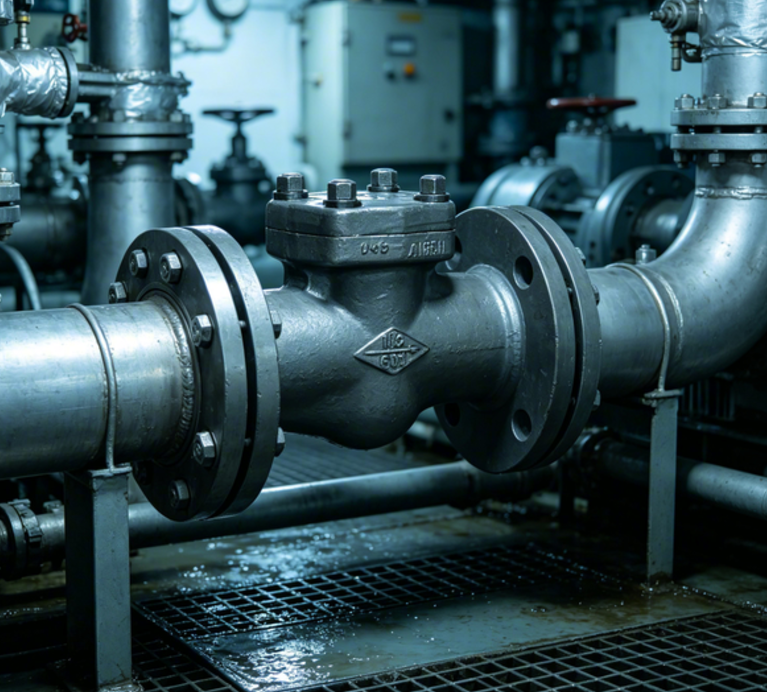
That's the exact problem a Marine Flange Check Valve is built to solve. It lets fluid pass one way while blocking movement the other way, and it does this entirely on its own — no operator standing by, no manual switch to flip. The valve just reacts to whatever the flow is doing.
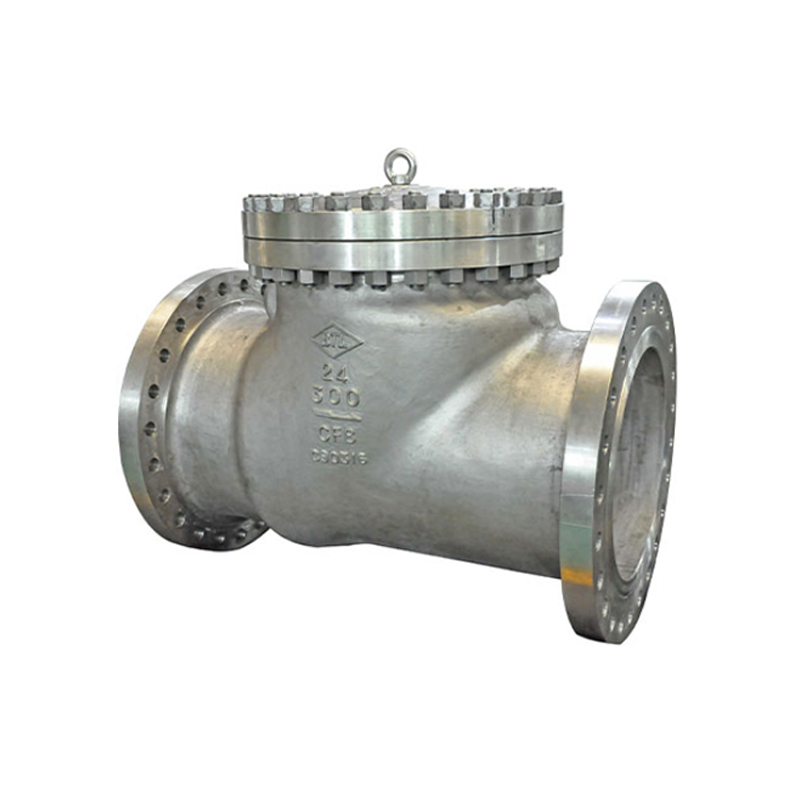
The flanged connection is what makes the valve practical to install in the first place. Bolt it between two pipe sections and it becomes a permanent part of the flow path. Marine check valves show up all over shipboard piping for exactly this reason — controlling one-way flow and keeping connected equipment safe from backflow.
What Is a Marine Flange Check Valve?
A Marine Flange Check Valve is a one-way valve designed for use in marine piping systems. Its basic purpose is simple. It allows fluid to pass through in the intended direction and closes when the flow tries to reverse.
The word "flange" describes the connection method. Instead of being connected only by threads or other joining methods, the valve has flanged ends that connect with matching pipe flanges. This makes the valve part of a larger piping arrangement.
The word "marine" relates to its intended environment. Ships and marine equipment often operate around water, salt, vibration, changing operating conditions, and limited installation space. Valve selection therefore needs to consider the service in which the component will be used.
A check valve is different from a manually operated isolation valve. Its main function is not to start or stop flow whenever an operator chooses. Instead, it responds to the direction of fluid movement.
When fluid moves normally, the internal closing element moves away from its seat. This creates a path for the fluid. When the flow weakens or begins to reverse, the closing element moves back toward the seat. The passage is then restricted or closed.
This basic action is what gives a Marine Flange Check Valve its non-return function.
How Does the Valve Allow Forward Flow?
Fluid arrives at the inlet side, and its pressure and momentum act directly on the closing element inside.
Once forward flow builds enough force to move that element, the passage opens up and fluid continues on through the pipe.
The exact motion depends on which design you're dealing with. A swing check valve pivots its disc around a hinge — forward flow pushes it open, and as flow drops off, it swings back shut. Other designs move differently entirely: some slide in a straight line, some rely on a spring to help pull the element closed. Different mechanics, same underlying goal — open for forward flow, close against reverse.
What matters here is that none of this requires anyone standing at a control panel. The fluid itself supplies all the force the valve needs to do its job under normal operation.
That's exactly why check valves fit so naturally into systems where flow direction has to be managed automatically. The valve just sits in the line and reacts as conditions shift around it.
End result: a pretty elegant piece of flow protection. Fluid moving the right way keeps the valve open and out of the way. Flip that direction, and the valve reacts accordingly.
What Happens When Flow Tries to Reverse?
Reverse flow begins when the pressure relationship within the piping changes. The fluid may start moving back toward the previous part of the system.
At this point, the closing element is pushed toward its seat. Once it reaches the closed position, the normal flow path is blocked.
This is the key action behind reverse-flow prevention.
Imagine water moving from a pump toward another part of the vessel. While the pump is operating and the water is moving forward, the check valve remains open. If the pump stops and water begins to move backward, the valve responds to the change and closes.
The same basic principle applies when pressure changes occur elsewhere in the piping. The valve does not need to understand why the flow has changed. It simply responds to the direction of the fluid.
This automatic response can help prevent fluid from returning to pumps, tanks, or other equipment. Marine check valves are commonly described as devices that open with forward flow and close against reverse flow.
The timing and quality of the closing action depend on the valve design and the conditions around it. This is why the selection of a check valve should be connected to the actual piping application rather than based only on its general appearance.
How Does the Closing Element Stop Backflow?
The closing element is the part that physically separates forward flow from reverse flow.
When the fluid moves in the correct direction, the element moves away from the sealing area. This leaves an open passage. When the direction changes, the element returns toward the sealing area.
Once the element reaches its seat, the opening is largely blocked. Fluid attempting to move backward then meets a closed barrier.
Different Marine Flange Check Valve designs achieve this action in different ways.
| Valve arrangement | How the closing action works | Common idea |
|---|---|---|
| Swing type | A disc moves around a hinge | Flow pushes the disc open and reduced flow allows it to close |
| Lift type | A disc or similar element moves away from and toward a seat | Forward flow lifts the element and reverse flow pushes it back |
| Spring-assisted type | A spring helps move the closing element toward the seat | The spring supports automatic closing |
| Dual-plate type | Two plates move with the flow and return toward the closed position | The plates create a compact non-return arrangement |
The valve body contains this movement within the piping path. The external flange connection keeps the valve secured between pipe sections.
The sealing area is also important. A check valve needs the closing element and its seat to come together in a way that restricts unwanted reverse movement. The exact sealing arrangement depends on the valve design and the service.
This is why a check valve is more than simply a piece of pipe with a flap inside. Its internal movement, closing surface, body, and connection all contribute to the non-return function.
Why Is Reverse Flow a Concern in Marine Piping?
Reverse flow can create problems because marine piping systems often connect several pieces of equipment. A change in one part of the system can influence another part.
For example, a pump may move fluid toward a storage area or another section of the vessel. If the flow stops and there is no protection against return movement, fluid may travel back toward the pump.
A check valve can help separate these two directions of movement. It allows the intended flow to continue while limiting movement in the opposite direction.
Reverse flow can also affect drainage and discharge systems. In some marine applications, external water can create pressure against an outlet. A non-return arrangement can help prevent water from moving back into internal piping.
Marine drainage applications provide a clear example. Shell or storm check valves can allow discharge from the vessel while closing when external water pressure or backflow acts in the opposite direction.
The same principle can be useful in other systems where two connected sections should not freely exchange fluid in both directions.
The purpose is not to make the entire piping system more complicated. It is to introduce automatic directional control at a specific location.
Where Are Marine Flange Check Valves Commonly Used?
Marine Flange Check Valves can be found in many types of shipboard piping. Their role changes slightly depending on the fluid and the equipment connected to the line.
Water systems are a common area of use. Freshwater and seawater may need to move between pumps, tanks, heat-related equipment, and other parts of the vessel. A check valve can help keep the intended direction of movement.
Cooling systems are another important application. Fluid may need to travel through equipment in a controlled direction. Preventing return flow can help keep the system behavior more predictable.
Ballast systems can also use non-return valves. Ballast water needs to move through designated piping paths, and the direction of flow can change during different operating conditions.
Bilge and drainage systems present another use. These systems may need to discharge water from inside the vessel while limiting the possibility of water returning through the same path. Marine plumbing references also identify bilge outlets, freshwater circuits, and drainage lines as common areas for non-return valves.
Some marine systems also handle oil or fuel. In these applications, the valve needs to be selected according to the fluid and the conditions in which it will operate.
| Marine system | Role of the check valve |
|---|---|
| Seawater system | Helps maintain the intended direction of water movement |
| Freshwater system | Limits unwanted return flow |
| Cooling system | Helps keep fluid moving through the planned path |
| Ballast system | Supports directional control within ballast piping |
| Bilge system | Helps limit water returning through discharge lines |
| Drainage system | Supports one-way discharge |
| Fuel or oil system | Helps restrict unwanted reverse movement |
The valve does not perform the same complete function in every application. Its role depends on the piping arrangement around it.
How Does the Flange Connection Support the Valve?
The flange connection is an important part of how the valve becomes integrated into marine piping.
A flanged valve is positioned between matching pipe connections. The adjoining sections are secured together so that the valve becomes part of the continuous flow path.
This arrangement can be useful in marine environments because piping systems often contain multiple components. Pumps, filters, tanks, heat exchangers, isolation valves, and check valves may all need to work together.
A flanged connection also gives maintenance personnel a practical way to access the valve when inspection or replacement is required. The valve can be separated from the pipe section without cutting the pipe itself.
The connection must still match the surrounding piping arrangement. The flow direction should be checked before installation, because a check valve is designed to operate in a particular direction.
An arrow or other marking is commonly provided on a check valve body to show the intended flow direction. Following that indication is important. If the valve is installed in the wrong direction, the internal closing element cannot perform its intended function.
Marine valve suppliers offer flanged check valves in several structural arrangements for water, seawater, oil, fuel, and other services.
What Factors Affect Reverse-Flow Protection?
The ability of a Marine Flange Check Valve to control reverse flow depends on more than the valve itself. The surrounding piping system also matters.
Flow direction needs to be clear. The valve should be positioned so that its internal closing mechanism can respond naturally to changes in flow.
The condition of the sealing surfaces is another consideration. Dirt, deposits, wear, or damage may interfere with the closing action. If the closing element cannot return properly to its seat, unwanted flow may continue.
The fluid itself also matters. Seawater, freshwater, oil, fuel, and other fluids can create different operating conditions. Marine valve selection therefore needs to take the service medium into account.
Installation orientation can also affect certain check valve designs. Not every valve operates in exactly the same way when placed in a different position. The manufacturer's installation guidance should therefore be followed for the selected valve.
The surrounding equipment should also be considered. A check valve placed near a pump may have a different role from one installed in a drainage outlet.
Maintenance is equally important. A check valve may appear simple from the outside, but its internal movement needs to remain free enough for the valve to open and close as intended.
Regular inspection can help identify signs of wear, contamination, sticking, or sealing problems before they interfere with the piping system.
For marine applications, material compatibility is another consideration because seawater and marine environments can be demanding. Marine check valve products are available in materials selected for different service conditions, including bronze and other corrosion-resistant materials.
A Marine Flange Check Valve therefore prevents reverse flow through a straightforward sequence. Forward fluid movement opens the valve. A change toward reverse movement causes the internal closing element to return toward its seat. The passage closes and restricts the fluid from traveling back through the line.
That simple automatic action allows the valve to serve as a directional barrier inside many marine piping systems, while the flange connection provides a practical way to integrate that barrier into a larger pipe network.
Recommended Products
The variety of models, to meet the development needs of various regions in the world.
Copyright © ZHEJIANG ROCK VALVE CO., LTD.

Cast Steel Valves Stock Wholesaler