


 English
 русский
 عربى
عربى Español
Industry News
Are High Temperature Gate Valve Suitable for Harsh Environments
Industrial systems rarely operate under ideal conditions. Heat builds up, pressure shifts, and materials face constant stress. In such settings, even small components carry a heavy responsibility. Valves, often overlooked, quietly regulate flow and ensure processes move as expected. Among them, high temperature gate valves are frequently considered when systems face demanding conditions.
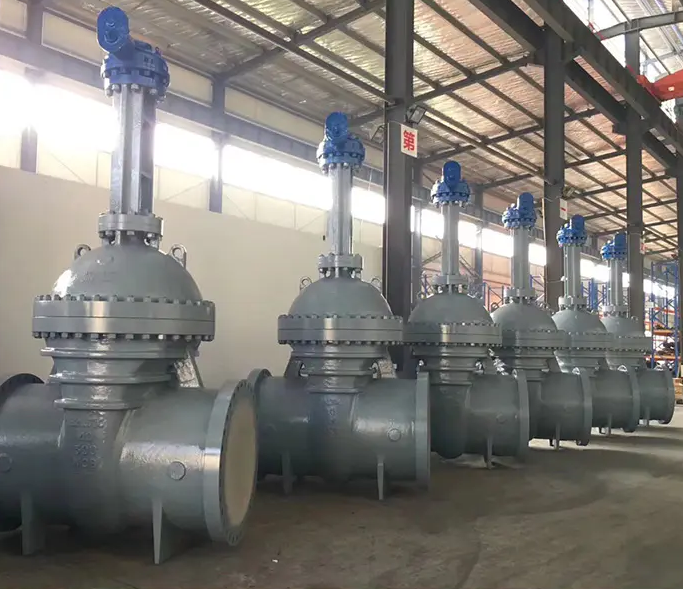
Their presence in complex environments raises a practical discussion. Can these valves truly handle harsh surroundings, or do they require careful limitation? The answer depends on how they are used, how they are selected, and how well they match the system they serve.
What Makes an Environment Harsh for Valves?
The term "harsh environment" sounds broad, yet in industrial practice, it has clear meaning. It usually refers to conditions that challenge the stability of materials and mechanical structures.
Such environments often include:
- Continuous exposure to elevated heat
- Long operating cycles without interruption
- Contact with aggressive or reactive substances
- Pressure variations that create internal stress
- Limited opportunities for maintenance
These conditions rarely appear alone. A system may combine heat with pressure, or chemical exposure with long operating hours. This overlap increases the burden on every component in the pipeline.
Valves, sitting at key points, must respond without hesitation. Any delay, leakage, or malfunction can affect the entire process.
How Do High Temperature Gate Valve Function in Practice?
A gate valve works by lifting or lowering a barrier inside the flow path. When open, the path remains largely unobstructed. When closed, it blocks movement entirely. This simple mechanism is one reason it is widely used.
In high temperature versions, adjustments are made to handle thermal stress. Materials are chosen to retain shape under heat. Internal components are arranged to allow slight expansion without affecting overall performance.
The operation itself remains straightforward. There is no need for constant adjustment. The valve is either open or closed, which reduces complexity during use.
Still, this simplicity does not eliminate all concerns. Heat can gradually affect the alignment of internal parts. Over time, this may influence how smoothly the valve operates.
Why Are These Valves Often Used in Demanding Conditions?
High temperature gate valves are not chosen by accident. Their design aligns with certain industrial needs, especially where stability matters more than flexibility.
Several features explain their use:
Minimal resistance during flow
When fully open, the valve allows fluid to pass with little obstruction. This helps maintain system efficiency.
Clear operational states
There is no ambiguity between open and closed positions. This reduces the chance of partial flow issues.
Adaptability across systems
These valves appear in various applications, from energy-related setups to manufacturing lines handling heated fluids.
Simple mechanical structure
Fewer moving interactions can reduce the likelihood of unexpected behavior under steady conditions.
These qualities make them suitable for systems where flow direction remains stable and adjustments are not frequent.
What Limitations Should Be Considered?
High temperature gate valves come with real advantages, but they're not without trade-offs, and understanding where those limits sit helps avoid putting the wrong valve in the wrong spot.
Heat doesn't do anything instantly—it works on materials slowly, over time. Metal expands as temperatures climb, and after enough cycles of heating and cooling, that expansion starts taking a toll. Even a slight shift in alignment, something that wouldn't matter much in a cooler environment, can be enough to throw off how well the valve seals.
Operation frequency matters too, more than people sometimes expect. Gate valves were never really built for constant opening and closing—they're better suited to staying in one position for long stretches. Push them through frequent cycling anyway, and internal wear tends to catch up faster than it would otherwise.
Sealing performance can also get shakier under harsher conditions. Getting a tight, reliable closure is one thing at moderate temperatures, but sustained heat makes that a lot harder to hold onto consistently.
And then there's maintenance, which tends to become a bigger issue than people initially plan for. In setups where access is tight or awkward, even a minor problem can turn into something that's genuinely difficult to fix. That's exactly why picking equipment that holds up reliably over the long haul matters so much—especially in situations where getting in to make repairs isn't quick or easy.
How Do Design and Manufacturing Influence Performance?
The ability of a valve to handle harsh conditions often reflects how it is designed and produced. Manufacturers approach this challenge through a combination of experience and process control.
Several aspects are usually considered:
- Material selection that can withstand continuous heat
- Structural design that allows controlled expansion
- Surface finishing to reduce friction and wear
- Assembly practices that maintain alignment
These elements work together rather than independently. A strong material alone cannot ensure performance if the structure does not support it. Similarly, precise assembly loses value if materials degrade quickly.
Production consistency also matters. Even small variations can affect how a valve behaves under stress. Reliable manufacturing practices help maintain uniform performance across different units.
Are High Temperature Gate Valves Suitable for Every Harsh Environment?
Short answer: no, not automatically. Whether a gate valve actually works well in a given setup comes down to how closely its design lines up with what the system actually demands—not just whether it can technically handle the heat.
In situations where flow needs to stay steady and largely uninterrupted, gate valves tend to do their job well. That's really what they're built for—holding a position and running steadily for long stretches without needing constant tweaking.
Things look different, though, in systems where flow needs continuous control or has to change frequently. Push a gate valve into that kind of role and it usually starts showing strain faster than expected—wear picks up, efficiency drops, and the valve ends up working against the demands being placed on it rather than with them. Other valve types are simply built for that kind of frequent adjustment, and they tend to hold up better where a gate valve would struggle.
What's actually flowing through the system matters too. Certain substances interact with valve materials in ways that quietly chip away at durability over time, even if nothing looks wrong on the surface at first. Figuring out how a given fluid behaves against valve materials is really something that needs sorting out before a valve gets picked, not after.
At the end of the day, it comes back to fit. A gate valve performs the way it's supposed to when its design actually matches the conditions it's up against—not just the temperature, but everything else the system throws at it day to day.
What Should Buyers Evaluate Before Making a Decision?
Selecting a valve for a harsh environment involves more than reviewing basic descriptions. It requires a broader view of how the system operates.
Several factors are often considered:
- Stability of operating conditions
- Frequency of valve use
- Accessibility for inspection
- Compatibility with surrounding equipment
- Responsiveness of the supplier
These points help form a clearer picture of what is needed. They also reduce the risk of selecting equipment that performs well in theory but struggles in practice.
The following table offers a simple way to compare different situations:
| System Condition | Consideration for Gate Valve Use |
|---|---|
| Stable high heat | Often suitable with proper design |
| Frequent adjustments | May not be ideal |
| Limited maintenance | Requires strong reliability |
| Complex fluid properties | Needs careful material selection |
| Long continuous operation | Can perform steadily if well matched |
This comparison is not fixed guidance. It serves as a reference to support decision-making.
How Does Installation Affect Performance in Harsh Conditions?
Even a valve that's genuinely well-designed can run into trouble if installation gets rushed or handled carelessly. Harsh environments don't leave much room for that kind of slack—small mistakes that might go unnoticed elsewhere tend to show up fast under heat and stress.
Alignment is one of the first things worth getting right. When a valve goes in slightly off, it creates uneven stress across the body that wouldn't be nearly as noticeable in a milder environment. Under sustained heat, though, that unevenness tends to compound rather than stay static.
Connection points need the same level of attention. A fitting that's just a bit loose might seem harmless at first, but over time it can turn into leakage or vibration that gradually gets worse. In high temperature systems especially, problems like that don't stay small for long—they tend to escalate faster than people expect.
Where the valve actually sits in the system matters too. A valve installed in a section that swings through extreme fluctuations is going to face a lot more stress than one sitting in a steadier, more stable part of the line. That difference in placement can end up shaping the valve's lifespan just as much as the valve's own design does.
None of this is particularly glamorous work, but getting these details right at the start is really what determines whether a valve performs the way it's supposed to from day one—rather than running into avoidable problems a few months down the line.
Can Maintenance Practices Extend Valve Lifespan?
Maintenance does not always require complex procedures. In many cases, it involves regular observation and timely response.
Simple practices can make a difference:
- Checking for signs of wear or leakage
- Monitoring ease of operation
- Ensuring connections remain secure
- Observing changes in system performance
In harsh environments, maintenance intervals may be longer due to limited access. This makes early detection of issues even more valuable.
A valve that receives consistent attention, even in small ways, often performs more reliably over time.
How Do Suppliers Contribute to Long-Term Performance?
The relationship between buyer and supplier extends beyond the initial purchase. In demanding environments, ongoing support becomes important.
A supplier who understands the application can offer guidance during selection. This reduces the chance of mismatch between product and system.
Clear communication also helps address issues quickly. When questions arise, a responsive supplier can provide direction without delay.
Consistency in production ensures that replacement parts or additional units behave in a similar way. This reduces uncertainty when expanding or maintaining a system.
Over time, this cooperation can simplify operations and improve overall stability.
Do High Temperature Gate Valves Support Evolving Industrial Needs?
Industrial systems continue to change. Processes become more complex, and expectations for stability increase. Equipment must adapt to these shifts without adding unnecessary complexity.
High temperature gate valves remain relevant because of their straightforward design. They fit well in systems that prioritize clear operation and stable flow.
At the same time, their role is not universal. As systems evolve, the need for different valve types may grow. The challenge lies in selecting the right component for each specific function.
In many cases, a combination of valve types provides the most balanced solution. Gate valves handle isolation, while other designs manage control and adjustment.
What Signals a Good Match Between Valve and Environment?
A good match is often reflected in how smoothly a system operates over time. Signs include:
- Stable flow without unexpected interruptions
- Consistent operation without excessive force
- Minimal leakage under normal conditions
- Reduced need for frequent intervention
These indicators suggest that the valve aligns well with its environment. They also reflect thoughtful selection and proper installation.
When these signs are absent, it may point to a mismatch rather than a product issue. Reviewing system conditions can help identify the root cause.
High temperature gate valves continue to serve in environments that demand resilience and stability. Their suitability is shaped not by general claims but by how carefully they are matched to real operating conditions.
Recommended Products
The variety of models, to meet the development needs of various regions in the world.
Copyright © ZHEJIANG ROCK VALVE CO., LTD.

Cast Steel Valves Stock Wholesaler