


 English
 русский
 عربى
عربى Español
Industry News
What Is a GB Standard Cast Steel Gate Valve
In industrial piping systems, there are many components that only attract attention when something goes wrong. A GB Standard Cast Steel Gate Valve is usually not one of those noticeable parts during normal operation. It sits in the line, handling flow control quietly, without drawing much focus.
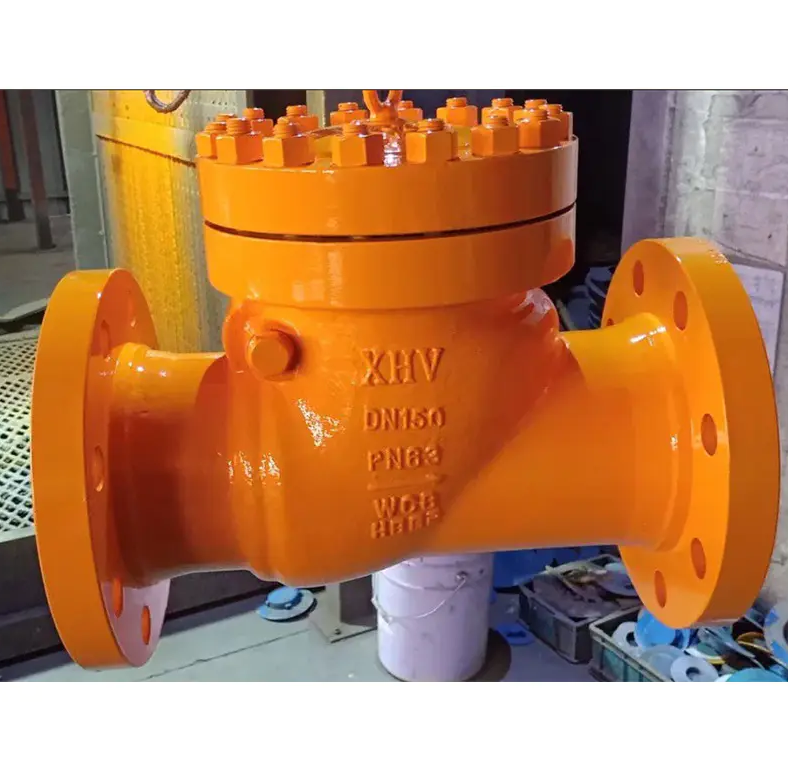
The idea behind it is not complicated. It is designed to open or close the passage inside a pipeline. But the way it performs this simple action makes it a stable choice in many engineering environments.
Instead of changing how a system behaves, it helps define when the system should be active and when it should be isolated.
Why is this valve commonly used in pipeline systems?
In any working pipeline, fluid movement is continuous. Once flow starts, it does not naturally stop at a convenient point. Without control components, the entire system would behave as a single open channel.
A gate valve solves this in a very direct way. It provides a clear separation between two states.
When the internal gate is lifted, fluid moves through the pipeline with minimal interruption. When it is lowered, the passage is blocked.
There is no complicated transition between states. It is either open or closed, which is often enough for industrial requirements.
This simplicity is one of the reasons it remains widely applied in different systems.
What does "GB Standard" mean in actual use?
The term "GB Standard" refers to a set of structured manufacturing and design requirements.
It does not change the working principle of the valve. Instead, it defines the baseline rules for how the product should be produced and evaluated.
This includes consistency in structure, material selection, and general performance expectations.
In practical terms, it helps ensure that valves produced under this guideline behave in a predictable way when installed in different systems.
That predictability is important. In pipeline networks, components need to work together without constant adjustment or unexpected variation.
How is a cast steel gate valve structured?
The internal structure is relatively straightforward, even though it must perform under demanding conditions.
Inside the valve body, there is a movable component that travels vertically. This movement controls whether the passage is open or blocked.
The outer shell is made from cast steel, which provides structural stability during operation. This material allows the valve to maintain its shape even when exposed to long-term mechanical stress.
There are no overly complex internal paths. The design focuses on direct movement and clear function.
Each time the valve operates, the same basic cycle repeats. Move up to open. Move down to close. That repetition is what gives it stability in system use.
Why is cast steel used for this type of valve?
Material selection is closely connected to how the valve behaves over time.
Cast steel is chosen because it can maintain structural integrity under continuous operation. It does not easily deform under pressure changes or repeated mechanical movement.
In real pipeline environments, conditions are not always stable. Pressure can shift. Flow can vary. Equipment must continue working without interruption.
Cast steel provides a level of stability that supports this kind of environment. It does not eliminate stress, but it handles it in a controlled way.
This is why it remains a common material choice for gate valve construction.
How does the valve control flow inside a pipeline?
The control method is based on a simple vertical motion.
When the internal gate is lifted, a clear passage is created for fluid to move through. When it is lowered, that passage is blocked completely.
The transition between these two states is direct. There is no intermediate mode that changes how the flow behaves.
This clear separation helps operators understand system status without ambiguity.
In many industrial setups, this direct response is preferred because it reduces uncertainty during operation.
Why is sealing performance important in real conditions?
When a valve is closed, the expectation is straightforward: flow should stop completely.
However, achieving a stable closed state depends on how well internal surfaces align and maintain contact.
If the sealing area is not stable, small leakage can occur. Even minor leakage can affect system performance over time.
A reliable seal allows the system to remain isolated when needed. This is especially important during maintenance or when sections of a pipeline must be shut off.
Sealing performance is not just about stopping flow at a moment in time. It is about maintaining that condition over extended periods.
Where is this valve typically applied?
GB Standard Cast Steel Gate Valves are commonly used in pipeline systems that transport fluids or gases.
These systems often involve multiple sections that need independent control. A valve provides the ability to isolate one part without affecting the entire network.
In many installations, the valve is not a standalone unit. It is part of a larger coordinated system where each component has a specific role.
Within that structure, gate valves serve as basic control points that support system flexibility.
Key functional characteristics
| Functional aspect | Behavior in operation | Practical impact |
|---|---|---|
| Flow control | Open or closed movement | Direct regulation |
| Cast steel body | Structural support | Long-term stability |
| Sealing area | Flow isolation | Leakage control |
| Standard design | Consistent structure | System compatibility |
How does installation affect performance?
Once installed, the valve becomes part of a fixed pipeline structure.
Its performance is influenced not only by design, but also by how it is positioned and connected within the system.
Even small alignment differences during installation can influence long-term movement behavior or sealing effectiveness.
Because of this, installation is often treated as part of system reliability rather than just a mechanical step.
A well-installed valve tends to operate more consistently over time.
Why is operation considered simple?
One of the main reasons for its continued use is the simplicity of operation.
The movement required to open or close the valve is straightforward. There is no need for complex interpretation or multi-step adjustments.
The response is immediate and clear. Operators can understand the system state based on position alone.
This simplicity reduces operational confusion and supports consistent handling across different environments.
What makes this valve still widely used today?
Even as industrial systems become more advanced, this type of valve continues to be used in many setups.
The reason is not complexity, but reliability in basic function.
It performs a clear task without unnecessary design layers. In many systems, that is enough.
When a pipeline requires simple and predictable flow control, this valve remains a practical option.
Its role has not changed much over time, which is part of why it continues to appear in modern applications.
Recommended Products
The variety of models, to meet the development needs of various regions in the world.
Copyright © ZHEJIANG ROCK VALVE CO., LTD.

Cast Steel Valves Stock Wholesaler