

 English
 русский
 عربى
عربى Español
Industry News
Home / News / Industry News / What Are the Common Challenges in Maintaining Cast Steel Valves for Petrochemical in Harsh Environments
In many industrial settings, Cast Steel Valves for Petrochemical sit quietly inside pipelines, handling flow control without drawing much attention. They are often expected to work under demanding conditions where heat, pressure, and aggressive media exist at the same time. In petrochemical environments, these conditions are not unusual. They are part of daily operations.
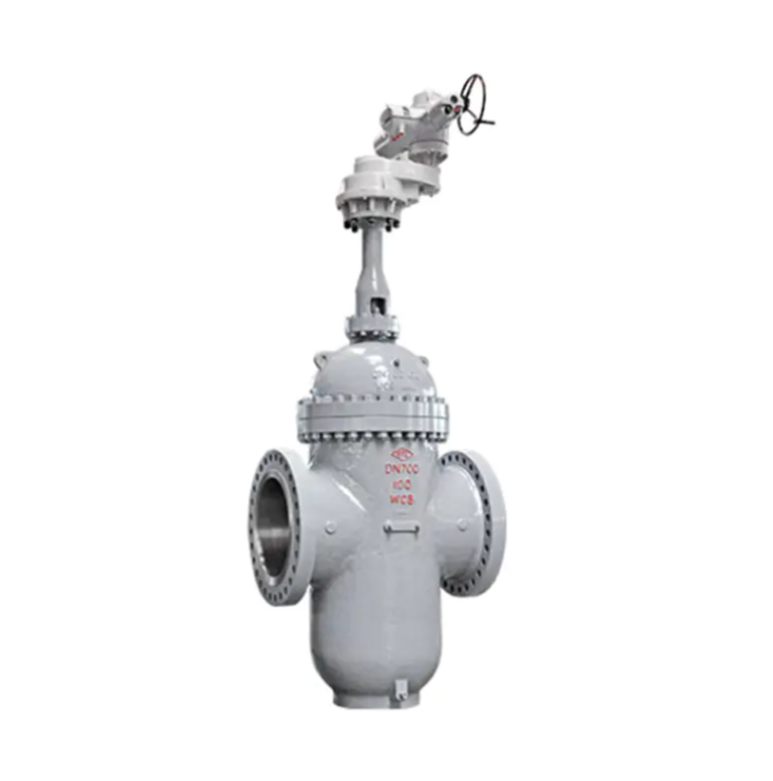
Maintenance teams know that keeping these valves in working condition is not a simple routine task. The challenges are layered. Some appear slowly over time, while others emerge without much warning. Understanding these issues helps explain why maintenance planning has become a central topic in industry discussions.
Harsh environments are not defined by a single factor. They are shaped by a combination of conditions that act together. Temperature swings, pressure changes, chemical exposure, and continuous operation all play a role.
In such settings, even a small weakness can develop into a larger issue. A surface that looks stable may begin to degrade. A sealing point may lose its tightness. These changes do not always happen quickly, which makes them harder to detect in the early stage.
Maintenance teams often deal with limited access as well. Valves may be installed in remote or confined areas. This adds another layer of difficulty. Inspection becomes less frequent, and repairs may require more planning.
The result is a situation where routine checks are not always enough. Maintenance becomes a balance between prevention and response.
Corrosion is one of the most discussed concerns. It does not always appear as a dramatic change. In many cases, it begins as a subtle surface reaction.
Different environments produce different corrosion patterns. Some cause uniform thinning. Others lead to localized damage. In petrochemical systems, the presence of reactive substances can speed up these processes.
What makes corrosion challenging is its unpredictability. Two valves placed in similar conditions may show different levels of wear. Small variations in flow or exposure can change the outcome.
Maintenance teams often rely on visual checks and periodic testing. However, corrosion can develop in areas that are not easy to observe. Internal surfaces are especially difficult to monitor.
This leads to a situation where some damage is only discovered during disassembly. By that time, the repair effort may be more complex.
Temperature and pressure rarely remain constant in real operations. They rise and fall based on process demands. These changes create stress inside the valve structure.
Over time, repeated stress can affect the integrity of the material. Expansion and contraction may lead to small distortions. These changes are not always visible but can influence performance.
Sealing components are particularly sensitive. A slight shift in shape can reduce their effectiveness. This may lead to leakage, even if the valve appears intact from the outside.
Pressure changes also affect how the valve operates. Sudden increases can place extra load on internal parts. Gradual changes may seem less severe, but they still contribute to wear over time.
Maintenance teams often track operating conditions, yet it is not always possible to predict how each fluctuation will impact a specific valve.
In many petrochemical processes, systems run without long interruptions. Valves open and close repeatedly, sometimes under load. This continuous use leads to gradual wear.
Friction between moving parts is one of the main contributors. Even with proper lubrication, contact surfaces experience slow degradation. Over time, this can affect smooth operation.
Another issue is the accumulation of small particles carried by the flow. These particles can act as abrasives. They may not cause immediate damage, but they increase wear rates.
The challenge lies in timing maintenance. Stopping operations for inspection is not always practical. Waiting too long may result in unexpected failure.
This creates a narrow window where maintenance should ideally occur. Finding that window requires experience and careful observation.
Sealing is the core part that keeps valves working properly. Even a tiny leak can trigger bigger problems for the whole system, especially in tough operating environments where keeping a tight seal is never an easy task.
Sealing parts are constantly exposed to high heat, strong pressure and chemical substances. These elements slowly alter their material properties. A seal that performs well under one set of conditions may fail to hold up when the working environment changes.
Deformation happens quite often. Once seals lose their original shape, they can no longer fit and close fully. Besides, dirt and residue tend to build up around sealing surfaces, which also ruins the tight contact between parts.
Maintenance crews usually change seals during regular upkeep. Still, figuring out the best time for replacement is not simple.
Changing seals too soon wastes resources. Putting it off for too long will cause equipment shutdowns and even bring safety risks. Striking the right balance makes daily maintenance work more challenging.
People usually pick suitable materials at the design stage, but material matching keeps affecting valves throughout their whole service period.
In petrochemical sites, different working media react differently with valve materials. Some material combinations hold up well, while others slowly wear down over time.
Cast steel features good overall strength and wide adaptability, yet it is not completely resistant to harsh surroundings. When exposed to certain chemical substances, its surface will gradually change.
When checking wear and faults, maintenance crews have to factor in material compatibility. Many issues that seem to be mechanical failures are actually caused by chemical erosion.
To tell how materials interact with working media, staff need plenty of practical experience and careful daily checks. Relying only on early assumptions will not work.
Inspection is a key part of maintenance. In harsh environments, it becomes more challenging for several reasons.
Access is often limited. Valves may be located in areas that are difficult to reach. This reduces the frequency of checks.
Environmental conditions also affect inspection quality. High temperature or confined spaces can limit the time available for observation.
Another issue is visibility. Some forms of wear develop internally. External inspection may not reveal the full picture.
Monitoring tools can help, but they are not always available in every setting. Even when they are used, interpreting the data requires careful judgment.
As a result, maintenance decisions are often based on partial information. This increases uncertainty.
Equipment upkeep in tough working environments never relies on one single method. Teams combine regular inspections, real-time status tracking and scheduled servicing together.
Some teams stick to preventive maintenance. They replace worn components according to typical service cycles. Others prefer condition-based upkeep, and only take action after spotting abnormal signs.
Both methods have their drawbacks. Preventive work may result in unnecessary part replacements. Meanwhile, condition-based maintenance requires reliable monitoring data to work well.
Most sites adopt a blended approach in actual work. They tweak plans based on on-site experience and how the equipment runs day to day.
Effective communication also matters a lot. Operators, technical engineers and maintenance crews exchange on-site findings. This helps everyone get a full view of how valves perform over long-term use.
Maintenance work is not merely technical repair. It is also a continuous learning process alongside daily operation.
The following table summarizes common issues and how they tend to appear in daily operations:
| Challenge Area | Typical Observation | Maintenance Difficulty |
|---|---|---|
| Corrosion | Surface changes or internal thinning | Hard to detect early |
| Temperature Stress | Minor distortion or seal changes | Effects build gradually |
| Pressure Variation | Irregular performance under load | Hard to predict impact |
| Mechanical Wear | Reduced smoothness in operation | Requires shutdown for inspection |
| Sealing Degradation | Small leaks or reduced tightness | Timing of replacement is uncertain |
| Material Interaction | Unexpected surface reactions | Requires deeper analysis |
| Limited Accessibility | Infrequent inspection opportunities | Increases risk of late detection |
This overview reflects how different challenges often overlap. A single valve may experience several of these issues at the same time.
Operational conditions are not static. They shift based on production needs. This variability affects how valves age and perform.
A valve used in stable conditions may show predictable wear. Another valve exposed to frequent changes may develop irregular patterns.
Maintenance teams often compare similar units to identify trends. However, differences in operation can lead to different results.
This makes standardization difficult. What works for one system may not apply directly to another.
Flexibility becomes important. Maintenance plans need to adapt to actual conditions rather than fixed assumptions.
Despite the use of monitoring tools and structured plans, human judgment remains important. Experienced technicians often notice subtle changes that are not captured by instruments.
A slight change in sound, movement, or response can signal an issue. These observations come from familiarity with the system.
Training plays a role as well. New team members learn from past cases. Over time, they develop their own understanding of patterns.
Maintenance decisions are rarely based on a single factor. They combine data, observation, and experience.
This human element adds depth to maintenance practices. It also introduces variation, as different teams may approach the same situation in different ways.
Maintenance is not a one-time activity. It evolves with the system. As valves age, their behavior changes. As operating conditions shift, new challenges appear.
Planning must account for these changes. A strategy that works today may need adjustment later.
Feedback loops are important. Each maintenance action provides information. This information helps refine future decisions.
Documentation also plays a role. Keeping records of issues and repairs helps build a knowledge base.
Over time, this process creates a more informed approach. It does not remove uncertainty, but it reduces it.
External factors are often overlooked. Weather conditions, surrounding equipment, and operational schedules all influence maintenance.
For example, extreme ambient conditions can affect how materials behave. Nearby equipment may limit access or create additional risks.
Scheduling is another factor. Maintenance windows may be short. Teams must complete tasks within limited time frames.
Coordination becomes essential. Different departments need to align their activities.
These external elements do not change the valve itself, but they shape how maintenance is carried out.
Over long periods, certain patterns become visible. Some valves show steady wear. Others remain stable for extended periods and then change quickly.
These patterns are not always predictable. They depend on a mix of factors, including usage, environment, and maintenance history.
Recognizing patterns helps in planning. It allows teams to anticipate possible issues.
However, patterns are not rules. They provide guidance, not certainty.
Maintenance remains a dynamic process, shaped by both known factors and unexpected developments.
The variety of models, to meet the development needs of various regions in the world.
Copyright © ZHEJIANG ROCK VALVE CO., LTD.

Cast Steel Valves Stock Wholesaler