


 English
 русский
 عربى
 Español

Industry News
How Does a Cast Steel Gate Valve Work in Pipeline Systems
Industrial pipelines hardly ever run at steady state. Fluid demand shifts as production runs change, equipment needs routine service, and certain pipe runs need to be locked off without shutting down the whole plant. That is why picking the right valve matters so much when you lay out an industrial system. Cast steel gate valves remain a go-to choice across many piping projects. The way they work is straightforward: a gate slides up and down inside the valve body to open or block the flow path. Simple as that action is, these valves are relied on heavily to isolate different sections of a pipeline.
Their widespread use grew alongside industrial infrastructure. Oil and gas sites, water treatment works, power plants and production facilities all run extensive pipe networks. Each site has its own set of working conditions, yet they all need reliable isolation when part of the line needs to be taken offline. For engineers and procurement teams, knowing how the valve operates is just the start. You also need to check its internal layout, material properties, build quality and whether it fits well with the adjacent pipework.
How Does a Cast Steel Gate Valve Control Fluid Flow?
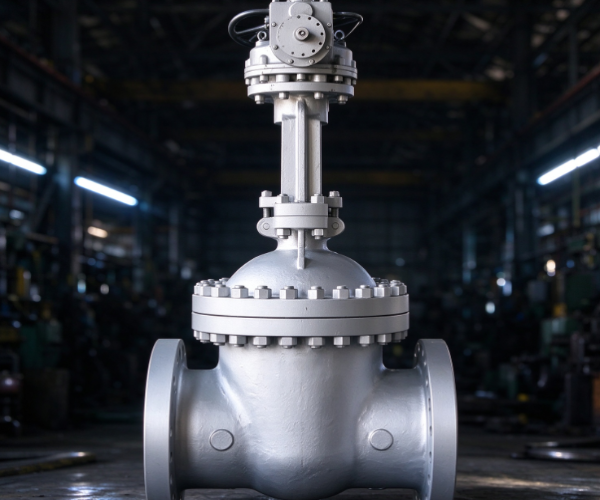
Operation starts with basic mechanical movement. Turn the handwheel or trigger the actuator, and the stem lifts or lowers the gate. As the gate moves up, it pulls away from the seat, opening the bore so fluid can pass through. Lower the gate, and it seats firmly to stop flow. This open-and-shut function is exactly why gate valves are mainly used for isolation.
In most industrial setups, these valves stay fully open during normal running. Staff only close them when one section of pipeline needs separating from the rest. Several core parts work together to deliver this function:
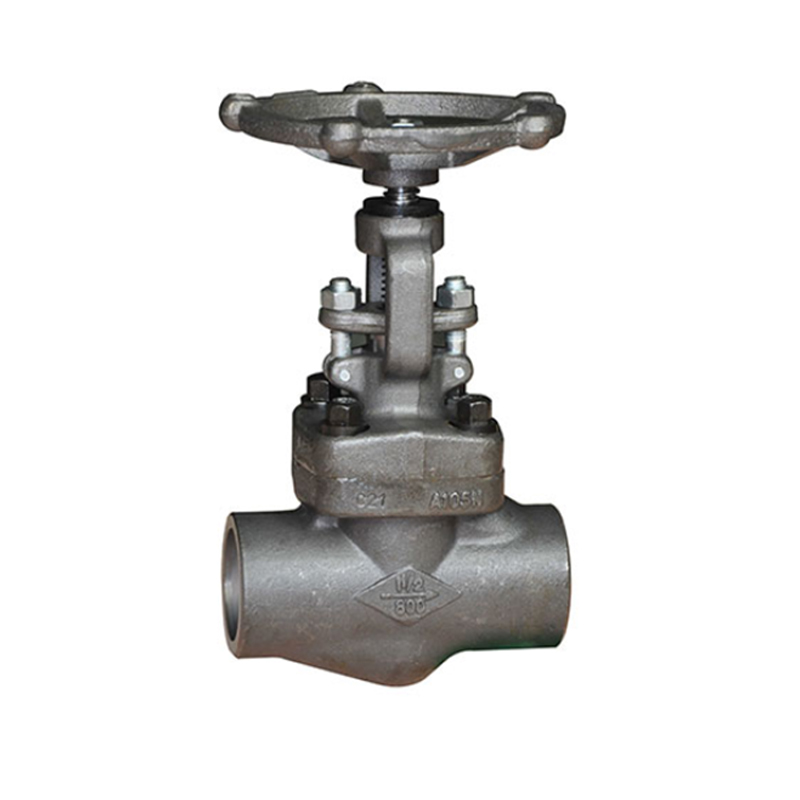
- Valve body: Holds all internal parts and connects the valve to the pipeline
- Gate: Moves vertically to open or close the flow bore
- Stem: Carries motion from the operating gear to the gate
- Seat: Provides the sealing surface for shutoff
- Bonnet: Caps the top of the valve and supports the stem assembly
- Packing: Stops fluid leaking out around the moving stem
- Operating mechanism: Handwheel or actuator used to drive the gate
The condition of these parts decides sealing performance. Even if the gate reaches the closed position, damaged seat faces or worn sealing material will still cause leaks. One practical rule to keep in mind: gate valves are not made for continuous throttling. If you leave the gate partly open for long periods, uneven fluid flow will wear internal surfaces faster. Look at other valve types if your system needs constant flow regulation.
Why Is the Casting Process Important to Gate Valve Construction?
The valve body forms the main load-bearing structure of a cast steel gate valve. It joins to the pipeline and contains the flow passage, so its quality directly impacts the strength and service life of the whole valve. Casting is used because it lets fabricators form complex one-piece steel shapes. Molten steel is poured into a mould and left to set. Once cooled, the rough casting goes through machining to hit the correct dimensions and surface finish.
Getting the outer shape right is not enough. Hidden defects inside the casting may not show on the surface, yet they can weaken the component and trigger failure under pressure. That is why in-process checks are standard during production. Casting parameters, raw material preparation and subsequent machining all shape the quality of the finished unit.
Buyers for pipeline projects now ask for far more supporting paperwork before placing orders. Material grade certificates, process records and inspection reports are commonly requested. This reflects a clear shift in industrial purchasing. Teams no longer choose valves based on price and outward appearance alone; they dig into how each valve was made.
Casting also gives manufacturers flexibility to build different body styles for varied connection types and pressure classes. Even so, a cast steel build does not mean the valve suits every fluid or working environment. The final selection must always match the actual service conditions on site.
What Happens Inside a Gate Valve When It Is Fully Open or Closed?
The difference between an open and closed gate valve is mainly determined by the position of the gate.
When fully open, the gate is lifted away from the central flow passage. Fluid enters through the inlet, passes through the valve body, and exits through the outlet. Since the gate is no longer occupying the main passage, the valve can provide a relatively direct flow path.
This is useful in pipeline systems where fluid needs to move continuously without frequent adjustment through the valve itself.
The situation changes during shut-off. As the gate moves downward, it approaches the seating surfaces. Once the gate reaches its closed position, the contact between these parts blocks the normal flow path.
However, closing a valve does not automatically remove pressure from the pipeline. Fluid may remain under pressure on either side of the gate. This is an important consideration during maintenance, particularly in facilities where several pipeline sections are interconnected.
A common operational mistake is treating valve closure as complete confirmation that nearby equipment is safe to access. In industrial environments, isolation procedures may also require pressure checks, drainage, and other safety measures.
The sealing condition deserves attention over the service life of the valve. Sediment, corrosion, and repeated operation can affect the contact surfaces. If the gate cannot make proper contact with the seat, the valve may no longer provide the required shut-off performance.
Where Are Cast Steel Gate Valves Used in Industrial Pipeline Systems?
The demand for industrial valves is closely linked to infrastructure development and the expansion of processing facilities. Although different industries transport different fluids, many rely on gate valves to separate pipeline sections during operation and maintenance.
Oil and gas industry
Oil and gas facilities contain extensive pipeline networks connecting processing equipment, storage systems, and transportation infrastructure. Gate valves may be installed at selected points to isolate sections when equipment requires inspection or repair.
Material compatibility is particularly important in these applications. The transported medium and surrounding operating conditions influence the choice of body material, internal components, and sealing arrangement.
Water treatment and distribution
Water treatment plants depend on interconnected pipelines for filtration, storage, pumping, and distribution. Maintenance work on one section should not always require shutting down the entire facility.
Gate valves help operators separate selected pipeline sections. Their operating position and accessibility can therefore influence how easily maintenance activities are carried out.
Power generation
Power plants use pipelines to transport water, steam, and other process fluids. Different systems have different requirements for temperature, pressure, and sealing performance.
Cast steel gate valves may be considered for suitable services where the material and construction meet the operating conditions.
Chemical processing
Chemical production facilities often handle fluids with different chemical properties. The compatibility of the valve body and internal materials needs careful evaluation.
In these environments, choosing a valve based only on its general material description may not be sufficient. Engineers also need to consider the actual fluid and its effect on the sealing components.
General manufacturing
Factories use pipelines for process water, compressed air, and various production fluids. Gate valves can provide isolation points around equipment, helping maintenance teams work on selected sections without changing the entire pipeline arrangement.
Although the applications differ, the underlying requirement is similar: operators need to control access to specific parts of the pipeline.
How Is a Cast Steel Gate Valve Different from Other Industrial Valves?
Not every valve is designed to perform the same task. Some are intended to stop flow, others regulate it, and certain designs prevent fluid from moving in the wrong direction.
Cast steel gate valves are generally associated with isolation rather than continuous flow control. Their vertical gate movement makes them suitable for applications where the valve is normally either fully open or fully closed.
Other valve designs work differently.
| Valve Type | Operating Method | Common Application |
|---|---|---|
| Cast Steel Gate Valve | A gate moves vertically to open or block the passage | Pipeline isolation |
| Globe Valve | A movable disc changes the flow opening | Flow regulation |
| Ball Valve | A rotating ball opens or closes the passage | Quick shut-off |
| Butterfly Valve | A rotating disc controls the flow passage | Isolation and selected flow control |
| Check Valve | An internal moving element responds to flow direction | Prevention of reverse flow |
The differences become more relevant when engineers plan a complete pipeline system.
For example, a production line may need to adjust fluid delivery during different stages of operation. A globe valve or another regulating valve may be suitable for that task. A ball valve may be considered where rapid operation is required.
A gate valve serves a different purpose. It provides an isolation point that can separate one part of the pipeline from another.
The choice also affects maintenance planning. Valve size, operating mechanism, installation position, and access to internal components can all influence how easily equipment can be serviced.
There is no single valve design that suits every pipeline. The selection should reflect the actual function required at each installation point.
What Should Buyers Consider When Selecting Cast Steel Gate Valves?
Industrial valve purchasing is often connected to a larger engineering project. A valve may need to match an existing pipeline, meet project specifications, and remain compatible with the transported medium.
This makes early communication between buyers, engineers, and manufacturers particularly important.
Some selection factors deserve attention before an order is confirmed.
Material and fluid compatibility
The body material and internal components should be suitable for the transported fluid. Water, oil, steam, and chemical substances can create different material requirements.
Pressure and temperature conditions
The valve needs to match the operating conditions of the pipeline. Buyers should provide accurate service information rather than relying on a general product category.
Connection arrangement
The valve connection must correspond with the pipeline design. Flanged and welded connections are common options, but the actual choice depends on project requirements.
Operating method
Smaller or more accessible installations may use manual operation. Other systems may require actuators to support remote or automated control.
Sealing requirements
The gate and seat must provide suitable shut-off performance. Sealing materials should also be compatible with the operating environment.
Installation and maintenance access
A valve may be technically suitable but difficult to operate if installed in a restricted location. Buyers should consider access to the handwheel, actuator, bonnet, and other serviceable parts.
In international procurement, documentation is another practical concern. Buyers may need product drawings, material information, inspection records, and relevant conformity documents.
For Cast Steel Gate Valve China manufacturers, the ability to understand different project requirements and communicate production details can be an important part of serving overseas customers. Product suitability depends not only on manufacturing capability but also on whether the supplied valve matches the actual application.
How Does Manufacturing Quality Affect Gate Valve Operation?
A cast steel gate valve may appear to have a straightforward structure, but several manufacturing stages influence its final performance.
The casting process determines the initial condition of the valve body. After casting, machining is required to prepare the internal passage, connection surfaces, and other areas. These operations need to follow the intended design so that the valve can be assembled correctly.
The gate and seat deserve particular attention. Their contact surfaces influence the shut-off function. If they do not fit properly, the valve may experience leakage even when the gate reaches its closed position.
Stem movement is another important detail. Excessive resistance can make operation difficult, while problems with the packing arrangement may cause leakage around the stem.
Manufacturers generally pay attention to several inspection areas:
- Casting appearance and internal condition.
- Body dimensions and connection surfaces.
- Gate and seat contact condition.
- Stem movement and operating smoothness.
- Packing and external sealing condition.
- Pressure and leakage test results.
Testing is not just a final production formality. It helps identify problems that may not be obvious during visual inspection.
Industry buyers are also becoming more interested in production consistency. For projects involving multiple valves or repeated orders, differences between batches can create installation and maintenance difficulties.
This is one reason why manufacturing traceability and inspection documentation matter in industrial procurement. Buyers want to know not only what material a valve uses but also how the product was manufactured and checked.
How Are Changing Pipeline Requirements Influencing Gate Valve Manufacturing?
Pipeline systems are becoming increasingly integrated with automated equipment and centralized control systems. In many facilities, operators need to monitor equipment status and manage different sections of the network without relying entirely on manual operation.
This trend is influencing valve design and manufacturing. Manual gate valves continue to have a place in industrial facilities, but automated operation is receiving attention in projects where remote control or coordinated equipment management is required.
The operating mechanism may therefore become part of the wider control system. Depending on the application, an actuator can replace manual operation and allow the valve to respond to control signals.
Material requirements are also changing. Some industrial facilities operate in environments involving moisture, chemicals, or temperature variation. Manufacturers need to consider how the selected cast steel grade and internal sealing materials will perform under these conditions.
Another development is the growing attention paid to maintenance throughout the equipment life cycle. Industrial buyers increasingly consider how easily a valve can be inspected, how replacement parts can be obtained, and whether maintenance work will affect surrounding production activities.
For manufacturers, these changes create practical challenges. They need to balance product design, production consistency, material selection, and project-specific requirements.
Cast steel gate valves remain part of this changing industrial landscape. Their role is not simply to open and close a pipeline. They also need to fit into larger systems where operational planning, equipment compatibility, and maintenance arrangements are closely connected.
Recommended Products
The variety of models, to meet the development needs of various regions in the world.
Copyright © ZHEJIANG ROCK VALVE CO., LTD.

Cast Steel Valves Stock Wholesaler