


 English
 русский
 عربى
عربى Español
Industry News
How to distinguish the switch direction of the ball valve?
The switch direction of the ball valve is generally clockwise to close and counterclockwise to open. If the ball valve is equipped with a handle, it can be judged by the state of the handle: when the handle switch and the pipeline are parallel, it means that the ball valve is in the open state; when the handle switch and the pipeline are vertical, it means that the ball valve is in the closed state. For rotary ball valves, it can also be judged by the rotation direction: when the knob is rotated counterclockwise, it means that the ball valve is open; when the knob is rotated clockwise, it means that the ball valve is closed.
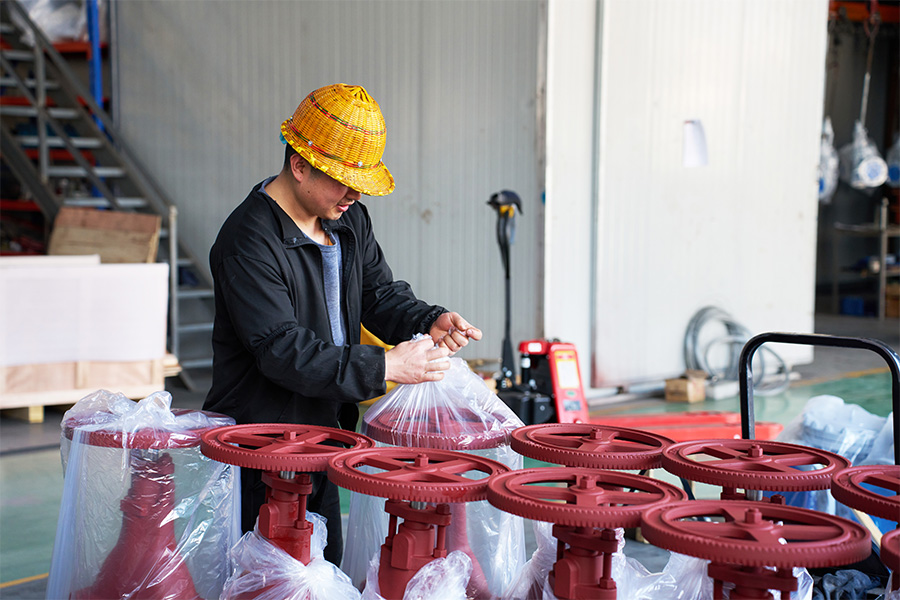
What Are Industrial Ball Valves?
They operate using a spherical closure element—commonly called a ball—that contains a central bore. When the bore aligns with the pipeline, fluid flows through; when rotated ninety degrees, the bore becomes perpendicular to the flow path, creating a shutoff.
One of the distinguishing characteristics of industrial ball valves is their quick quarter-turn operation. This feature allows an operator or actuator to switch between open and closed positions with minimal effort. Because the ball itself offers a smooth surface and rotates with limited friction, ball valves tend to provide stable and consistent sealing performance.
These valves are manufactured using various metals, including carbon steel, stainless steel, brass, duplex steel, and alloy materials. The choice of material largely depends on pressure ratings, temperature conditions, and the type of fluid handled. For example, stainless steel ball valves are often selected for corrosive media, while carbon steel valves may be used in general industrial or petrochemical service.
Industrial ball valves are available in floating-ball and trunnion-mounted designs. Floating-ball models rely on line pressure to press the ball against the downstream seat, while trunnion-mounted valves include additional mechanical support for the ball, making them suitable for larger sizes or higher pressures.
In general industrial operations, ball valves are valued for their relatively simple structure, straightforward maintenance, and broad compatibility with automated actuation. They are commonly found in industries such as oil and gas, chemical processing, water treatment, HVAC systems, power generation, and manufacturing. Their ability to maintain stable shutoff under a variety of conditions contributes to their usefulness across different pipeline configurations.
What Is the Background of Standard Ball Valves?
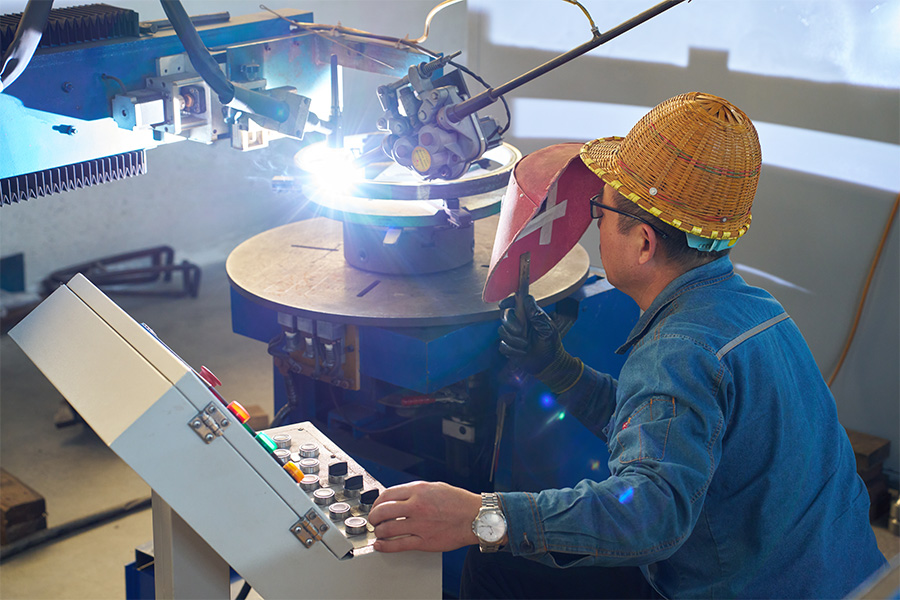
The development of standard ball valves can be traced back to the mid-20th century, when industrial systems were evolving toward higher pressures, greater automation needs, and stricter performance expectations. Traditional valve types such as gate, globe, and plug valves were already well established, but each had limitations—especially regarding quick operation and ease of maintenance. Engineers sought a valve type that could deliver tight shutoff with fewer moving parts and simpler actuation.
Early ball valve designs were mainly used for low-pressure applications. As materials improved and manufacturing processes advanced, ball valves became suitable for more demanding conditions. The introduction of PTFE and other advanced polymeric seat materials in the 1950s and 1960s played a major role in improving sealing performance. These soft-seated designs offered lower torque requirements and reduced leakage pathways.
As industries standardized engineering practices, organizations such as API (American Petroleum Institute), ISO (International Organization for Standardization), and ASME (American Society of Mechanical Engineers) established detailed requirements for ball valve design, testing, pressure classes, fire-safe capabilities, and dimensional consistency. These standards contributed to greater reliability and interchangeability among manufacturers worldwide.
Key developments in standard ball valves included:
Trunnion-mounted ball valves for large-diameter and high-pressure lines.
- Fire-safe designs, which were created to maintain sealing capability under fire exposure and limit external leakage.
- Full-port and reduced-port variations, offering flexibility depending on flow requirements.
- Advanced seat materials, including reinforced polymers and metal-seated systems, useful for abrasive or high-temperature service.
- Compatibility with automated actuators, such as electric, pneumatic, and hydraulic systems, which expanded the role of ball valves in process control.
Today, standard ball valves are used extensively in process engineering. Their evolution reflects ongoing improvements in metallurgy, manufacturing precision, and automated control technology. For industries that require consistent shutoff and flexible actuation, standard ball valves remain a widely adopted solution.
Where Are 2-Way Industrial Ball Valves Suitable for Use?
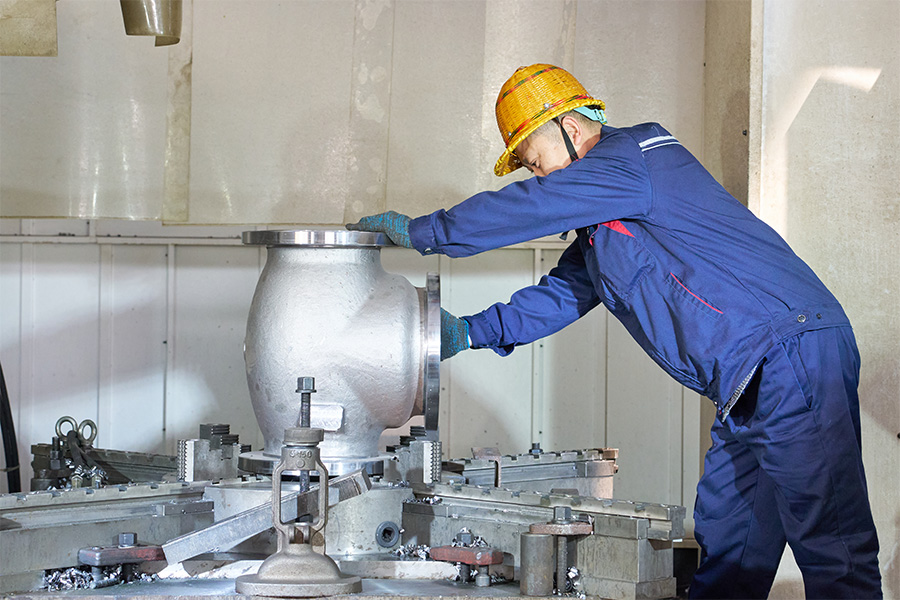
A 2-way industrial ball valve is one of the simplest and common configurations. It has two ports—an inlet and an outlet—and allows flow in a single direction when opened. Because of its straightforward design, it is well suited for many applications across both high-pressure and low-pressure systems.
General On/Off Service
In pipelines where flow needs to be started or stopped without complex regulation, 2-way ball valves perform effectively. Their quick, quarter-turn operation is practical for daily operation or automated shutoff systems. Examples include water treatment facilities, irrigation systems, and general industrial processing lines.
Oil and Gas Pipelines
Oil and gas operations frequently use 2-way ball valves for isolating sections of pipelines, controlling the flow of crude oil, natural gas, or refined products, and managing injection systems. Their compact structure and reliable sealing capability allow them to operate effectively in demanding conditions, including offshore platforms and downstream processing facilities.
Chemical and Petrochemical Plants
The chemical industry requires valves capable of handling varied media, including corrosive or hazardous fluids. Stainless steel and alloy steel 2-way ball valves are well suited for these environments, providing dependable isolation and compatibility with automated control systems.
HVAC and Building Services
Heating, ventilation, and air-conditioning systems make regular use of 2-way ball valves to control chilled water, hot water, or steam flow. Their quick response and straightforward actuation support energy-efficient building management.
Food, Beverage, and Pharmaceutical Systems
Hygienic ball valves with polished internal surfaces are used in systems that demand high sanitation levels. These valves help maintain product integrity and support cleaning processes such as CIP (Clean-in-Place) or SIP (Sterilize-in-Place).
Power Generation
Power plants utilize 2-way industrial ball valves in auxiliary systems, cooling circuits, gas control lines, and fuel-handling pipelines. Their stable operation and compatibility with high-temperature seat materials make them a useful choice in turbine-related systems.
Marine and Offshore Applications
In marine systems, space limitations and environmental exposure require valves that are durable and compact. 2-way ball valves made from corrosion-resistant materials are used for ballast systems, bilge lines, fire control networks, and seawater cooling circuits.
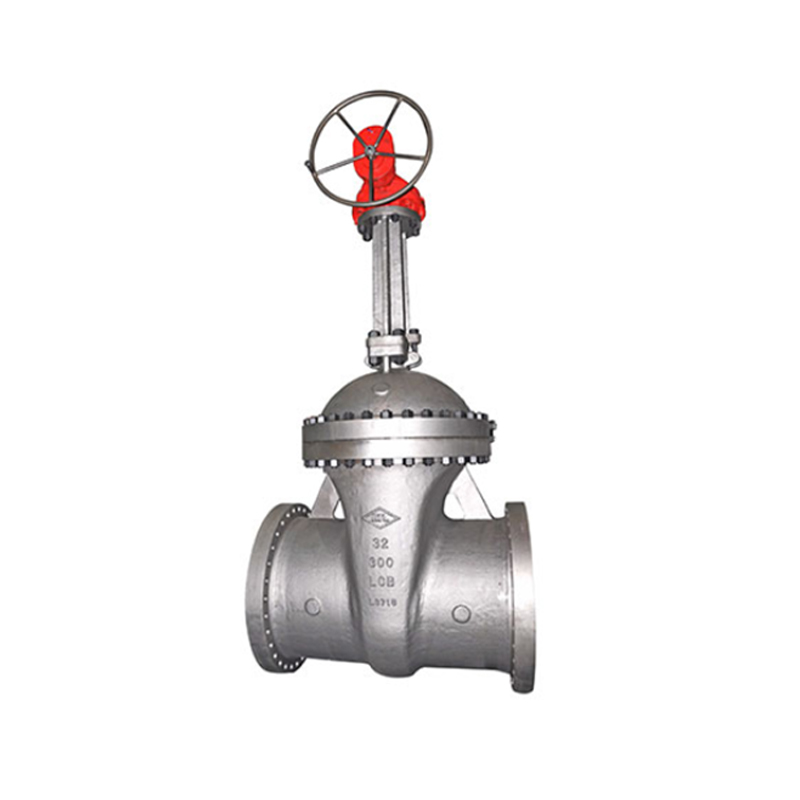
Recommended Products
The variety of models, to meet the development needs of various regions in the world.
Copyright © ZHEJIANG ROCK VALVE CO., LTD.

Cast Steel Valves Stock Wholesaler